Membership Agreement Template
Let’s be real: when I first opened the Membership Agreement Template, I wasn’t expecting embroidery inspiration. But as a designer who’s stitched everything from nursery wall art to boutique aprons, I’ve learned that even legal-looking graphics can hold quiet design power—if you know how to read them.
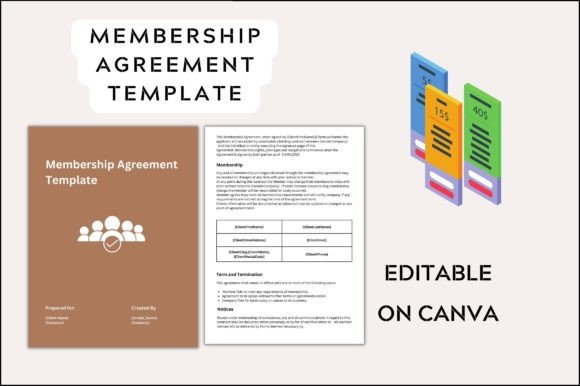
This isn’t a floral monogram or a playful script. It’s clean, structured, and deliberately restrained—like a well-drafted contract signed in ink on linen paper. The layout leans into symmetry and balanced white space, with clear section headers, subtle dividers, and minimal ornamentation. There’s no extraneous scrollwork or decorative flourishes. What stands out is its intentional simplicity: thin lines, consistent font weight, generous margins, and a hierarchy built for legibility—not flair.
I tested it on a custom embroidered tote bag for a local co-op—think organic cotton, medium-weight canvas, natural undyed fabric. We placed the Membership Agreement Template centered on the front panel, scaled to 4.2 inches wide. Stitched in soft ecru thread with a light tear-away stabilizer, it read like a quiet manifesto: professional, grounded, and unmistakably handmade. Customers didn’t just notice it—they paused. One asked, “Is that *real*? Like, did you write it?” That’s the quiet strength of this design: it doesn’t shout. It invites trust.
That said, it’s not universally flexible. On stretchy fabrics—say, a lightweight jersey sweatshirt—the fine lines and tight spacing between clauses can blur during hooping or stitching unless stabilized aggressively. I’d avoid it on baby onesies unless simplified further; tiny text loses clarity at under 3 inches tall, and newborns don’t need legalese in satin stitch. Likewise, curved surfaces like caps demand careful digitization adjustments—this template wasn’t built for distortion, so manual repositioning or slight scaling is wise before sending to the machine.
Where it shines is in context-driven projects: embroidered patches for community gardens, pillow covers for co-housing collectives, tea towels for shared kitchens, or aprons for makerspaces. It works beautifully as a small hoop design (5x7” or larger) on stable, medium-to-heavy fabrics—linen, denim, twill, or sturdy cotton duck. The low stitch density (no dense fill areas or overlapping layers) makes it forgiving on textured surfaces and kind to your needle. No heavy satin borders to snag, no nested appliqué layers to shift—it’s a flat, efficient file that stitches cleanly and finishes crisply.
For Etsy sellers and craft fair vendors, the Membership Agreement Template adds unexpected depth to product storytelling. Pair it with a handmade journal or a set of seed packets, and suddenly your shop isn’t selling items—it’s offering belonging. That resonance matters. Buyers connect with authenticity, not just aesthetics. This design feels human-scaled and purpose-built—not mass-produced clip art masquerading as craft.
It also holds up in black-and-white mockups, which is huge for digital product previews. Whether you’re listing it as a printable or bundling it with other Print Templates, its clarity translates across formats. No gradients, no transparency issues, no color-dependent meaning—it’s functional as a Graphics asset first, decoration second.
But here’s where practicality kicks in: always test before committing. Run a sample on scrap fabric that matches your final project’s weight and weave. Check contrast—light thread on dark fabric can mute fine strokes; dark thread on light may overwhelm delicate spacing. Review stitch density visually: does the text look airy or cramped? Does the bottom margin vanish into the hemline? And yes—confirm licensing. Since this is labeled “Editable Membership Agreement Template Printable For Everyone,” double-check whether commercial use of the *finished embroidered item* is permitted, especially if you're selling stitched goods on Etsy or through your own small shop.
Stabilizer choice matters more than usual here. Because the design relies on crisp line work—not bold shapes—you’ll want at least a light cutaway or hybrid stabilizer for anything beyond smooth quilting cotton. Skip the basic tear-away on knits or loosely woven linens; ghosting or puckering will compromise the clean look this template promises.
Thread color is quietly strategic. Navy or charcoal reads as serious and timeless on cream or oatmeal fabric—ideal for wedding gifts or boutique branding. Olive or terracotta adds warmth for holiday embroidery or nursery decor. Avoid metallics or variegated threads; they distract from the design’s calm authority. Stick with matte, high-quality polyester or cotton-wrapped poly for longevity and wash resistance—especially on kitchen towels or aprons that’ll see real use.
One note on personalization: while the template is editable, embroidery files rarely support live text editing. If you plan to stitch names, dates, or custom clauses, you’ll need to adjust the vector or .dxf source first—or treat it as a base layer and add lettering separately. Don’t assume the digital embroidery file includes dynamic fields. Always verify what you’re actually getting: a static stitch file, a layered .svg, or a true editable PDF.
In short, the Membership Agreement Template isn’t flashy—but it’s thoughtful. It fits best where intention matters more than ornament: community projects, ethical brands, slow-made goods, and products that carry meaning beyond the surface. It won’t dominate a festival booth, but it might be the detail that makes a customer remember your name. That’s the mark of smart design—not volume, but resonance.
Before you stitch it:
- Test on scrap fabric matching your final project’s texture and weight
- Check thread contrast on both light and dark backgrounds
- Verify hoop size compatibility—don’t force a 6-inch design into a 4x4 hoop
- Inspect small details at 200% zoom: are all lines distinct? Do corners stay sharp?
- Use proper stabilizer—light cutaway for most medium fabrics, heavier for knits
- Confirm licensing terms for commercial embroidery and finished product resale
- Review how it renders in grayscale mockups—clarity shouldn’t depend on color
It’s not for every project. But for the right one—a co-op tote, a maker-space apron, a shared-kitchen tea towel—it’s unexpectedly perfect: quiet, confident, and quietly human.