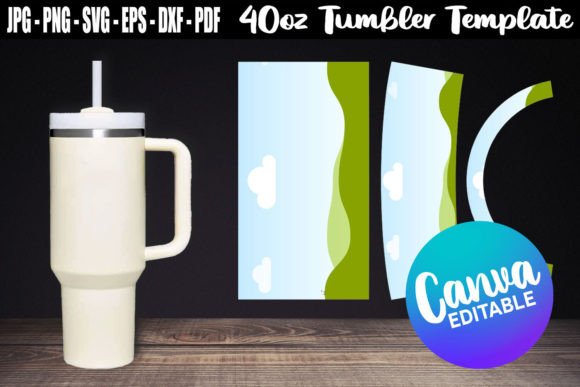
40oz Tumbler Template Canva Editable
A Designer’s First Look: Clean, Practical, and Ready for Real Projects
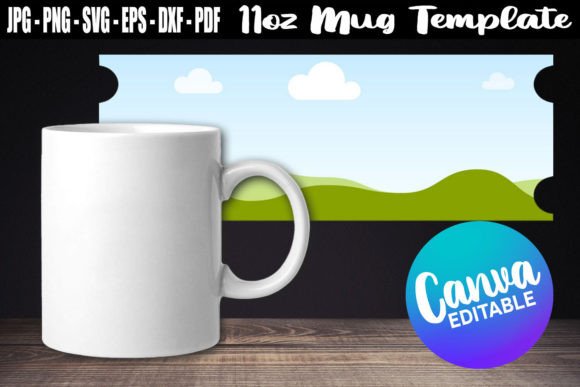
When I opened the 40oz Tumbler Template Canva Editable, my first thought wasn’t “pretty” — it was “usable.” As someone who tests hundreds of digital embroidery files a year for client work, Etsy listings, and boutique merchandise, I scan fast: Is the layout intuitive? Does the shape translate cleanly to fabric? Will it hold up under satin stitch or delicate running stitch? This template delivers clarity over flair — three tumbler views (front, side, wrap) on one sheet, with both solid and outline versions. That dual-layer approach tells me the creator understood real-world embroidery needs: outline for tracing or appliqué prep, solid for fill-stitch confidence. It feels like a tool, not a decoration.
Where This Template Earns Its Keep — And Where It Doesn’t
I tested the 40oz Tumbler Template Canva Editable as part of a custom embroidered tote bag series for a local coffee shop’s holiday pop-up. The goal was simple: clean branding that reads instantly at arm’s length, holds up after repeated washing, and looks handmade — not digitally slapped on. On medium-weight canvas tote bags with tear-away stabilizer, the solid version stitched out crisply. The curves flowed, corners stayed sharp, and the proportions matched actual 40oz tumblers — no awkward stretching or distortion. That realism matters: customers recognize authenticity. A misshapen tumbler design undermines trust in your craft business before the first stitch is even sewn.
It also worked well on crewneck sweatshirts (medium-stretch cotton/poly blend), especially when paired with a light cutaway stabilizer. The outline version doubled nicely as a guide for fabric appliqué — I layered felt behind it and used satin stitch to finish the edges. For baby embroidery projects? I’d use only the outline version on onesies — less density means softer wear and easier laundering. But I’d skip the solid version on thin knit fabrics or stretchy caps: too much fill stitch risks puckering, especially near the base curve where tension shifts.
Smart Use Cases — And Quiet Red Flags
This isn’t a standalone embroidery design. It’s a template — and that distinction changes everything. Think of it as your foundation layer, not the finished product. It shines brightest in:
- Custom apparel: Sweatshirt chest logos, tote bag centerpieces, apron pockets
- Personalized gifts: Monogrammed tumblers (via iron-on transfer or sublimation prep), nursery decor pillows
- Craft business assets: Printable mockups for Etsy listings, branded packaging labels, digital product previews
- Commercial embroidery: Consistent sizing across batches of promotional items or wholesale orders
But caution applies where detail meets limitation. Tiny lettering added inside the tumbler silhouette? Test it — small fonts often blur in fill stitch. Dark fabric backgrounds? Run a black-and-white mockup first: contrast drops fast in dense satin areas. Curved surfaces like baseball caps? Stick to the outline version only — full fills rarely conform cleanly without specialized cap hoops and heavy stabilizing. And never assume the PNG or JPG will scale cleanly for embroidery digitizing — always start from SVG, DXF, or EPS if you’re converting to machine embroidery format.
What This Template Says About Your Brand — Without a Word
Your choice of design assets quietly signals your standards. Using the 40oz Tumbler Template Canva Editable thoughtfully says you value consistency, scalability, and professional presentation. When stitched onto a linen tea towel for a bridal shower gift, its balanced proportions and clean lines elevate the handmade product — no extra embellishment needed. When used across a set of embroidered patches for a small shop’s loyalty program, it builds visual recognition without shouting. That’s brand consistency built in.
But misuse dilutes that effect. Overcrowding the tumbler with busy patterns, forcing it onto a tiny hoop (under 4”), or skipping stabilizer on textured fabrics turns a strong asset into a liability. Customers notice stitching pull, uneven edges, or faded outlines — and they associate those flaws with your attention to detail, not the file itself.
Practical Notes Every Embroidery Designer Should Run Through
Before cutting fabric or loading thread, here’s what I do — and recommend you do — with the 40oz Tumbler Template Canva Editable:
- Test on scrap fabric first — same weight, same stretch, same color as your final project
- Check thread color contrast against both light and dark backgrounds using a simple print mockup
- Review stitch density if converting to embroidery file — high-density fills need proper stabilizer support
- Confirm hoop size compatibility — the full wrap view may require a 5x7” or larger hoop
- Inspect small details in the outline version: are corners crisp? Are curves smooth enough for satin stitch?
- Test black-and-white mockups to gauge readability at smaller sizes
- Use appropriate stabilizer: tear-away for stable wovens, cutaway for knits, mesh for lightweight linens
- Verify licensing terms before selling finished items or bundling this as part of a digital product — commercial use isn’t automatic just because it’s a Canva template
Final Thought: A Quiet Workhorse, Not a Showstopper
The 40oz Tumbler Template Canva Editable won’t go viral on Instagram — and it shouldn’t. It’s designed for repetition, reliability, and real work. Whether you’re an Etsy seller scaling holiday inventory, a craft fair vendor building a cohesive line of kitchen textiles, or a small shop owner refreshing branded merch, this template saves time without sacrificing quality. It respects the craft: no unnecessary flourishes, no hidden scaling traps, no formats that break in conversion. Just clean, consistent, editable geometry — ready to become something meaningful in your hands.