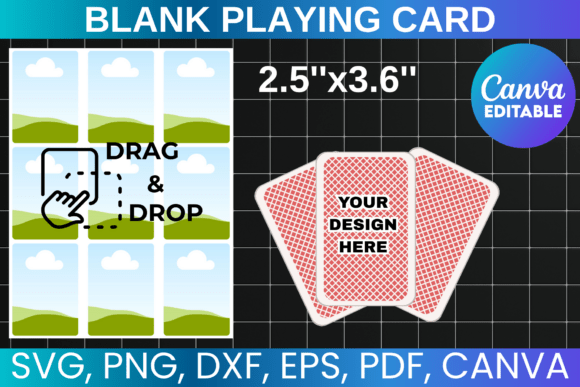
Blank Playing Card Canva Template: Graphics for Real Local Branding
As a brand designer who’s developed visual identities for over 40 local businesses—from artisanal candle studios in Portland to family-run bakeries in Austin—I opened the Blank Playing Card Canva Template expecting another decorative clipart file. Instead, I found a surprisingly versatile graphic design asset with quiet intention behind its simplicity. It doesn’t scream “trendy”—it whispers “thoughtful.” That subtlety is exactly what makes it valuable for small business branding that needs to feel human, memorable, and grounded—not algorithm-optimized.
A Warm, Handcrafted Mood—Not Just Another Template
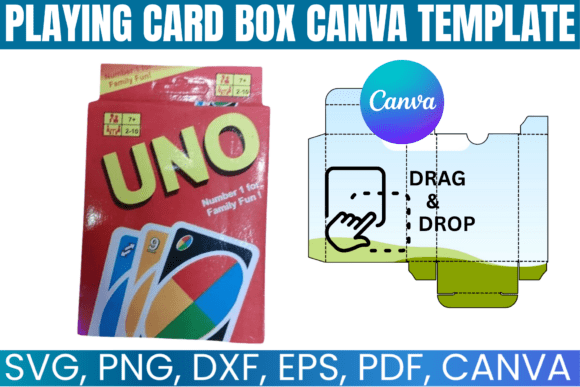
The first impression? A clean, centered frame with subtle rounded corners, balanced negative space, and crisp edges—neither overly ornate nor starkly minimal. It reads as friendly yet refined, leaning into organic modernity rather than sterile digital perfection. For a handmade soap brand launching seasonal lavender-honey bars, this template immediately suggested soft elegance—no forced whimsy, no distracting flourishes. It feels like a well-designed blank canvas you’d hand-select for letterpress printing, not a generic placeholder pulled from a creative marketplace.
Where This Graphic Design Asset Earns Its Keep
In real local business use, the Blank Playing Card Canva Template shines where authenticity meets utility:
- Product labels for small-batch food items—think jam jars or spice blends—where the card shape doubles as a mini-story panel (ingredient callouts, harvest date, maker’s note)
- Packaging accents: die-cut hang tags for boutique apparel, belly bands for gift boxes, or sticker-backed cards tucked inside candle packaging
- Thank-you cards and printable inserts that reinforce brand voice—especially effective when paired with a warm serif or gentle script font
- Social media graphics for product launches or seasonal campaigns (e.g., “Holiday Edition” card overlays on Instagram carousels)
- Menu graphics and price lists for cafés or florists seeking cohesive, tactile-feeling visuals—even as digital displays
- Product mockups for Etsy or Shopify banners, where the card format lends instant context and scale
It supports stronger first impressions by giving even modest products a sense of considered presentation. When placed beside competitor packaging at a farmers’ market, that extra half-inch of intentional white space—and the confident symmetry of the card layout—signals care. That builds customer trust faster than any tagline.
Real Brand Identity Lift—Without Overdesigning
This isn’t a logo design tool—but it *supports* logo design and brand identity work beautifully. I recently used the Blank Playing Card Canva Editable Template to develop secondary brand elements for a children’s wooden toy shop: custom trading cards featuring each product line (forest animals, ocean friends), printed as collectible inserts. The consistency across formats—same proportions, same corner radius, same baseline spacing—created immediate visual hierarchy and reinforced recognition across touchpoints.
That cohesion extends to marketing visuals: the same card structure adapted as a website banner, a printable sticker sheet, and a social media highlight cover creates continuity without repetition. For time-strapped small business owners managing their own web design and social media graphics, that repeatability is gold.
Use With Intention—Not Everywhere
Like any strong graphic design asset, the Blank Playing Card Canva Template has boundaries. It’s less effective for:
- Formal corporate branding (law firms, financial advisors)
- Very small labels (<50mm width) where rounded corners eat into legibility
- Crowded packaging layouts where the frame competes with essential info (allergens, net weight, certifications)
- Luxury minimalist brands relying on extreme reduction—here, the card shape adds structure, not silence
- Backgrounds with low contrast (e.g., light gray text on pale beige)—test black-and-white usage early
If your brand voice is “quiet luxury,” lean into the template’s restraint. If it’s “festive & bold,” push color saturation and typography—but never let decoration override clarity.
Practical Designer Notes Before You Commit
Before integrating the Card Sublimation Template into client work or your own product line, run these checks:
- Test it on real packaging mockups—not just Canva previews—to assess how the frame interacts with material texture (kraft paper, matte laminate, linen stock)
- Preview in grayscale: does the structure hold up without color cues?
- Check PNG transparency—especially if layering over photography or textured backgrounds
- Verify SVG editability: can you adjust stroke weight or corner radius without distortion? (Critical for scaling to large-format prints)
- Test alongside your brand fonts—does it pair well with your serif, sans serif, script, and display typefaces?
- Confirm commercial license terms: some versions allow physical product resale; others restrict use to digital-only marketing visuals
- Compare side-by-side with top 3 competitors’ packaging—does it help you stand out, or blend in?
For local business owners juggling baking, bookkeeping, and branding—this Custom Card Template Blank Playing Card Canva Editable Template isn’t magic. But it *is* leverage: a thoughtful, editable foundation that saves hours while elevating perceived value. In an era where shoppers choose based on feeling—not just function—it’s the kind of detail that turns a “nice label” into a “brand I remember.”
Used well, the DIY Playing Card Design becomes more than a template. It becomes part of your brand’s quiet confidence—on the shelf, in the mail, and in the mind.