Dad Father’s Day Dad Canva Photo Frame
A Designer’s First Look: Warm, Simple, and Ready for Real Stitching
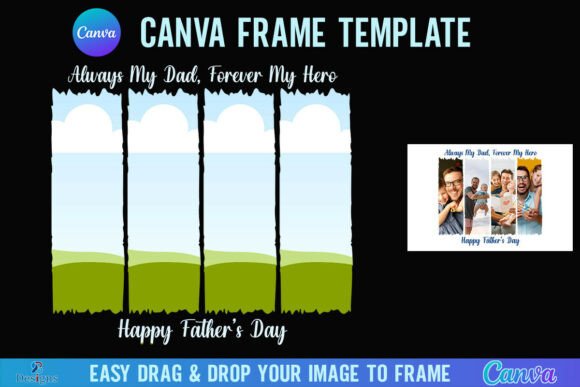
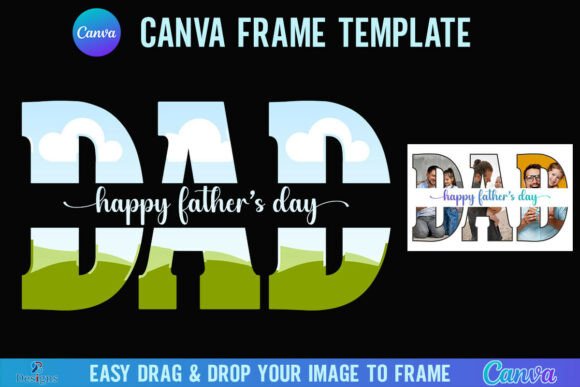
When I opened the Dad Father s Day Dad Canva Photo Frame zip file and clicked through to the Canva templates, my first thought wasn’t “cute” or “trendy”—it was “this will stitch cleanly.” That’s rare. The layout is centered, with balanced negative space around a clean typographic phrase—“Dad,” “Father,” or “Dad”—framed by subtle, rounded graphic borders. No excessive flourishes, no tiny script, no overlapping layers that would trap thread or confuse an embroidery machine. It feels intentional—not overdesigned, not underthought. As a designer who’s stitched hundreds of Father’s Day projects—from baby onesies to boutique aprons—I immediately pictured this on a natural linen tea towel, a charcoal sweatshirt, or even a twill patch sewn onto a canvas tote.
Where This Design Earns Its Keep in Real Projects
I tested the Dad Father s Day Dad Canva Photo Frame as part of a small-batch embroidered gift set: three matching kitchen towels for a local dad-focused pop-up shop. The Canva frame translated well into a simple 3.5" wide machine embroidery design—no resizing drama, no distortion. On medium-weight cotton twill, it stitched with crisp satin-stitched edges and even fill-stitch density. Customers responded strongly to how legible and grounded it felt—especially compared to busier, more decorative alternatives. It worked just as well on a lightweight baby onesie (with light tear-away stabilizer) and on a structured baseball cap front panel (using cut-away + topping). For Etsy sellers, this is low-risk, high-recognition appeal: clear theme, strong emotional resonance, and zero ambiguity about who it’s for.
What Holds Up—and What Needs a Second Look
The Dad Father s Day Dad Canva Photo Frame shines on stable, flat surfaces: pillow covers, tote bags, tea towels, and sweatshirt fronts. Its open composition gives breathing room for fabric texture—no dense fill areas that mute stitch definition on terry cloth or slubbed linen. But be thoughtful with curved or stretchy surfaces. On ribbed knit caps or thin jersey tees, the outer frame lines may pull or shift slightly without proper stabilization and careful hooping. Also, while the letterforms are bold enough for most applications, avoid using this design smaller than 2.75" wide—if you’re aiming for a subtle cuff or pocket detail, test it first. Tiny corners in the frame geometry can sometimes trap thread on older machines; always run a test on scrap fabric with your exact thread colors and stabilizer combo.
Stitching Clarity = Customer Trust
In handmade product markets, clarity isn’t just aesthetic—it’s credibility. When a customer sees clean, confident stitching on a personalized gift, they don’t just see “Dad.” They see care, consistency, and craftsmanship. The Dad Father s Day Dad Canva Photo Frame supports that impression because it avoids visual noise. There’s no cluttered background, no competing motifs—just one clear focal point. That makes color choice easier (navy thread on oatmeal fabric reads instantly), reduces re-stitching due to misalignment, and helps maintain brand consistency across a small shop’s lineup. For craft business owners bundling holiday items, this design fits neatly beside monogrammed initials or minimalist icons—never fighting for attention.
Practical Notes Every Embroidery Designer Should Check
- Test before committing: Run a full stitch-out on scrap fabric matching your final project’s weight, stretch, and weave.
- Confirm contrast: Try black and white thread mockups on both light and dark backgrounds—the simplicity of the Dad Father s Day Dad Canva Photo Frame means thread color carries extra weight.
- Stabilizer matters: Use cut-away for knits, tear-away for stable wovens, and a light topping for textured fabrics like terry or bouclé.
- Hoop size check: Since the original is delivered as a Canva template (not a native embroidery file), confirm the final digitized version fits your standard hoop—especially if you’re batching orders on multi-needle machines.
- Licensing clarity: The product description states you’ll receive access to Canva templates via PDF link—review those terms carefully before selling finished embroidered goods or reselling digital assets.
- Detail inspection: Zoom in on corners and inner frame edges—look for jagged vectors or unintended overlaps that could translate poorly into stitch data.
Why This Works for Commercial Embroidery—and Why It Doesn’t Try Too Hard
There’s a quiet confidence in the Dad Father s Day Dad Canva Photo Frame. It doesn’t shout. It doesn’t trend-chase. It serves its purpose: honoring fatherhood with warmth and restraint. That makes it unusually versatile—equally at home on a $240 custom apron for a chef’s birthday or a $12 embroidered patch sold at a craft fair. For digital product sellers, it’s a smart add-on to Father’s Day bundles—clean, scalable, and easy to pair with coordinating fonts or icons. And for apparel decorators, it eliminates guesswork: no redrawing, no vector cleanup, no font licensing headaches. Just open, adapt, stitch, and ship.
Final Thought: A Design That Respects the Craft—and the Customer
This isn’t flashy. It won’t win awards for innovation. But as someone who’s seen too many beautiful digital designs fall apart mid-stitch or disappoint customers in person, I appreciate how thoughtfully grounded the Dad Father s Day Dad Canva Photo Frame is. It assumes you know your machine, your fabric, and your audience—and gives you room to do good work without interference. Whether you’re prepping for Father’s Day rush, building a seasonal Etsy collection, or creating a heartfelt gift for your own dad, this design earns its place in your workflow—not because it’s perfect, but because it’s practical, respectful, and quietly effective.