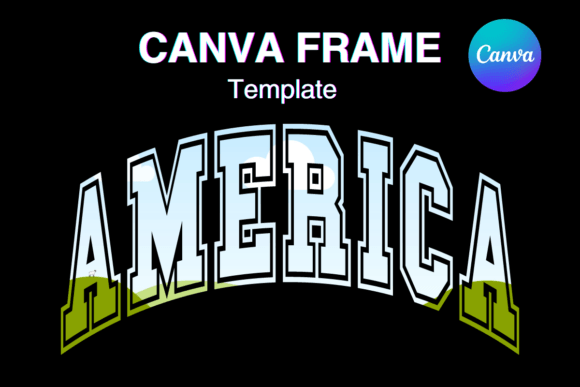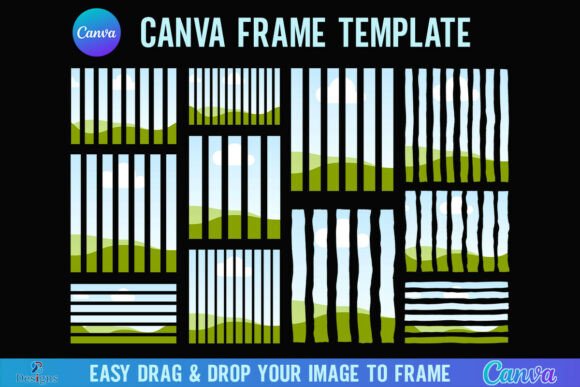
Striped Canva Frame Wavy Stripes Graphics
A Wavy, Warm First Impression — Right for Artisan Brands
When I opened Striped Canva Frame Wavy Stripes Canva, my first thought was: “This feels like a sunlit bakery counter or a handmade soap label fresh off the drying rack.” The wavy stripes aren’t rigid or industrial—they’re soft, rhythmic, and gently organic. They suggest approachability, craft, and tactile warmth—ideal for local businesses rooted in authenticity: think small-batch coffee roasters, botanical skincare studios, children’s toy shops, or seasonal candle brands. It leans feminine but not fussy, playful but not childish, modern but never sterile. It doesn’t scream luxury—but it *does* whisper care, consistency, and human-scale design.
Where This Graphic Design Asset Earns Its Keep
In real-world small business branding, Striped Canva Frame Wavy Stripes Canva shines where personality meets practicality. I recently used it for a Portland-based lavender honey brand—applying the frame as a subtle border on product labels, a decorative wrap around their Instagram carousel posts, and as a unifying motif across thank-you cards and shelf talkers. Here’s how it supports tangible business goals:
- Stronger first impression: On crowded farmers’ market tables or boutique shelves, that gentle wave catches the eye without shouting—guiding attention to your logo or product name.
- Better product recognition: Repeating the stripe pattern across labels, stickers, and social media banners builds visual rhythm—so customers begin to associate the wave with your brand’s calm, natural ethos.
- Clearer visual hierarchy: When layered behind key text (like “Small-Batch” or “Locally Sourced”), the frame adds depth while keeping copy legible—especially when paired with clean sans serif or warm script fonts.
- More consistent brand identity: As a reusable graphic design asset, it bridges digital and physical touchpoints—whether you’re designing a printable menu for your café or a Canva template for weekly Instagram Stories.
- Improved customer trust: Thoughtful, cohesive decoration signals intentionality—a quiet signal that you invest in how your product is seen and experienced.
Best Uses: From Labels to Launch Campaigns
This isn’t just a “pretty border.” It’s a versatile tool for small business branding with real production value. Use it where it enhances—not overwhelms:
- Product labels and jar wraps for food, skincare, or home fragrance lines
- Packaging accents—think belly bands for soap boxes or ribbon-inspired borders on gift tags
- Hero graphics for website banners or seasonal campaign posters (e.g., “Summer Harvest Collection”)
- Decorative brand elements in printable inserts—like recipe cards tucked into tea tins or care instructions inside candle boxes
- Social media graphics: story highlights, promo carousels, or limited-edition launch announcements
- Product mockups—overlaying the frame onto flat-lay photos of mugs, tote bags, or ceramic vessels to preview packaging concepts
- Boutique visuals: price tags, window clings, or mini flyers for local events
Use With Care: Context Matters
Even strong design assets have limits—and misapplication can dilute impact. Avoid using Striped Canva Frame Wavy Stripes Canva in these situations:
- Formal corporate branding: It won’t align with law firms, financial advisors, or B2B tech brands seeking austerity or authority.
- Very small labels or ingredient-heavy layouts: The wave loses definition under 0.75” height and competes with fine-print regulatory text.
- Crowded packaging: If your box already features photography, icons, certifications, and QR codes, adding this frame risks visual noise—not harmony.
- Low-contrast backgrounds: Light gray stripes on cream paper? Test it. Print samples often mute subtlety.
- Luxury minimalist brands: For ultra-clean, monochrome, high-end positioning, this graphic design asset reads as decorative—not essential.
Practical Brand Designer Notes You Can’t Skip
Before locking it into your client’s packaging design or social media calendar, run these checks:
- Test on real packaging mockups: Drop it onto a 3D bottle or kraft box render—not just a flat Canva canvas.
- Check black-and-white usage: Does the wave retain shape and contrast when converted for stamping, embossing, or monochrome print?
- Preview at actual label size: Zoom out to 25%—does the rhythm hold, or does it blur into texture?
- Test with your brand colors: Try it over your primary palette—does it lift or mute your hues? Swap stroke weight if possible.
- Compare against competitors: Does it differentiate—or accidentally echo a nearby shop’s aesthetic?
- Review PNG transparency: Is the background truly transparent? Any faint halo or anti-aliasing artifacts?
- Inspect SVG/vector editability: Can you adjust spacing, scale individual waves, or recolor paths? Not all Canva templates allow deep editing.
- Test beside your fonts: Does it complement your serif body type? Hold up next to your handwritten logo lockup? Play well with bold display headers?
- Confirm commercial licensing: You will get 1 zip file, please unzip to use. -------------------------------------- 1 PDF file with the link inside. Click on the link and you will have access to the Canva frame templates. Easy to D—yes, but verify the license covers physical product sales, resale, and client work before finalizing.
Final Thought: Decoration With Purpose
Striped Canva Frame Wavy Stripes Canva isn’t filler—it’s functional decoration. In an era where local business owners juggle baking, bottling, posting, and shipping, having a reliable, mood-aligned graphic design asset saves hours and sharpens presentation. Used intentionally—as part of a thoughtful packaging design system or cohesive social media strategy—it becomes more than a frame. It becomes part of your brand’s quiet signature: recognizable, human, and unmistakably yours.