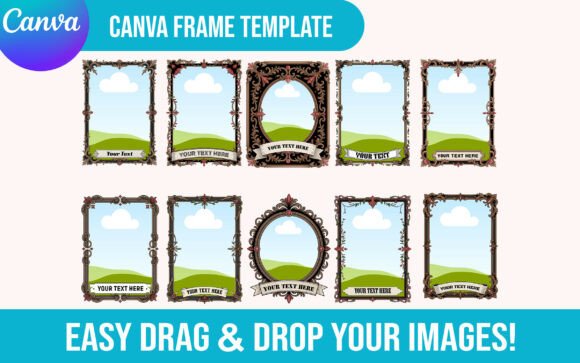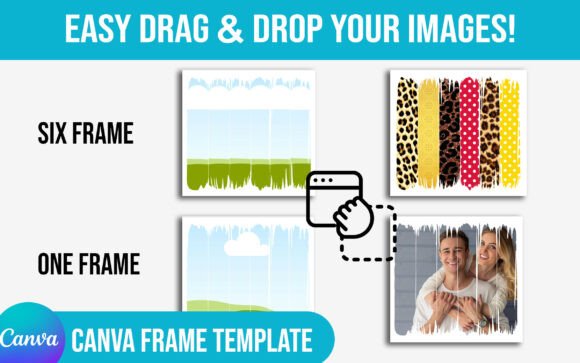
Brushstrokes Canva Frame Template
A Designer’s First Look: Loose, Lively, and Full of Potential
When I opened the Brushstrokes Canva Frame Template, what struck me first wasn’t precision—it was personality. This isn’t a rigid border or symmetrical monogram. It’s a fluid, painterly frame with visible gesture: thick swipes, tapered ends, and intentional gaps that breathe. As an embroidery designer who’s stitched hundreds of client projects—from boutique baby onesies to holiday market tote bags—I immediately pictured it wrapping around a simple embroidered name on a linen tea towel or framing a small floral motif on a child’s apron. The mood is warm, handmade, and quietly confident—not fussy, not sterile, but full of craft energy.
Where It Shines (and Where It Needs Care)
I tested the Brushstrokes Canva Frame Template in a real scenario: prepping a custom embroidered sweatshirt for a local coffee shop’s staff gift. We placed it as a subtle border around a small logo on the left chest. On medium-weight cotton-blend fabric with tear-away stabilizer, the strokes held beautifully—especially the broader sections, which translated into clean satin stitch runs. But here’s what I noticed: the thinnest tapering ends softened slightly during stitching. Not a flaw—but a reminder that this design leans into expressive imperfection, not technical sharpness.
It works especially well for:
- Personalized gifts: Framing names on baby blankets or nursery pillows adds instant charm without overwhelming delicate fabrics.
- Tote bag designs: Its organic shape softens the geometry of canvas, making hand-stitched or machine-embroidered versions feel intentional and curated.
- Embroidered patches: When digitized thoughtfully, the brushstroke edges give patches a hand-drawn authenticity that stands out at craft fairs.
- Holiday embroidery: Paired with a simple evergreen or star, it elevates seasonal kitchen towels or stocking cuffs without looking cliché.
But use caution on:
- Small hoop sizes (under 4”): The natural flow of the strokes needs breathing room—tight cropping loses its rhythm.
- Stretchy or thin fabric like jersey or rayon challis: Without proper cutaway stabilizer and careful hooping, fine tapering areas may pucker or distort.
- Dark fabric with light thread: The open negative space in the strokes means contrast matters more than in solid-fill designs—test thread colors in natural light.
- Curved surfaces like caps: The asymmetry works, but avoid placing the longest stroke across the crown seam where distortion is most likely.
What It Adds to Your Finished Product—Beyond Aesthetics
This isn’t just decoration. The Brushstrokes Canva Frame Template subtly shifts how customers perceive your work. On an Etsy listing for personalized pillow covers, it signals “handmade with care,” not “mass-produced clip art.” When used on boutique merchandise—say, framing a small shop logo on a linen apron—it reinforces brand warmth and approachability. I’ve watched buyers linger longer on listings where frames like this add visual hierarchy without clutter. It doesn’t shout; it invites closer looking.
That said, it won’t rescue weak execution. If your stitch density is too high for the fabric, those lush brushstrokes will stiffen and lose their airiness. If you skip testing on scrap fabric first, you risk disappointment when the tapering ends don’t land crisply on textured terry cloth or fleece. This template rewards intention—not speed.
Practical Notes from the Hoop
Before using the Brushstrokes Canva Frame Template in your next embroidery project, here’s what I do—and recommend you do too:
- Test on scrap fabric that matches your final project’s weight and texture—even if it’s just a 2” square.
- Check thread color contrast in both daylight and indoor lighting; the open areas make color choices more visible than in dense fill-stitch designs.
- Review stitch density if you’re digitizing it yourself—or ask your digitizer to preserve the “light touch” of the original strokes.
- Confirm hoop size compatibility. Since the product description mentions a PDF with a Canva link but no specific dimensions, measure the frame in Canva before importing into your embroidery software.
- Inspect small details at 200% zoom: Are tapering ends clean? Do corners flow naturally, or do they look pinched?
- Test black-and-white mockups: This design relies on shape and rhythm more than detail—so if it reads clearly in grayscale, you’re in good shape.
- Use appropriate stabilizer: Medium-weight cutaway for knits, tear-away for stable wovens, and fusible + tear-away for lightweight linens.
- Verify licensing before selling finished items or digital products. The description says it’s a Canva frame template—check whether commercial use is permitted for your business model.
Final Thought: A Frame That Feels Like a Signature
The Brushstrokes Canva Frame Template isn’t a one-size-fits-all solution. It’s a stylistic choice—one that suits makers who value expressive, human-made quality over rigid uniformity. It fits naturally into embroidery projects where storytelling matters: baby embroidery that feels tender, holiday embroidery that feels nostalgic, boutique branding that feels personal. Used thoughtfully, it doesn’t just hold space—it gives your work a quiet signature. Just remember: great frames don’t distract. They honor what’s inside them. And this one does exactly that.